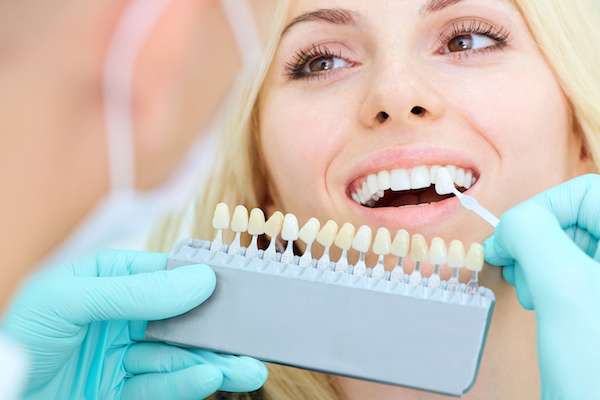
Dental veneers are a type of prosthetic that can be placed by a cosmetic dentist to improve the shape, color, and overall appearance of a patient’s smile. Used for aesthetic and restorative purposes, veneers consist of a thin shell of porcelain or a different tooth-colored composite material that is attached to the front surface of the natural tooth. While the concept of veneers is easy to understand, the procedure for attaching them requires several steps.
The dental veneer procedure
To successfully apply veneers, the cosmetic dentist must prepare the natural teeth, form the prosthetic, and apply it to the teeth. The exact process used depends on whether the patient opts for porcelain or composite resin veneers. Choosing between these options can be difficult as each come with their own set of pros and cons.
Getting porcelain veneers
While porcelain veneers are more expensive and invasive then resin-based ones, the result is much longer-lasting. Porcelain is very similar in appearance to enamel and is incredibly strong. Patients can expect about 20 years of use before a replacement procedure may be needed. Additionally, this material is resistant to staining and unlikely to chip with regular maintenance.
When a person chooses to get porcelain veneers, the natural teeth being worked on are permanently altered to accommodate the prosthetic. After the consultation appointment, the next visit with the cosmetic dentist is spent reshaping the surface of the tooth, removing enamel, and adding material where possible. Impressions are taken of the teeth and sent to a dental lab. Often, the patient is given a set of temporary veneers.
About two weeks later the custom-made porcelain veneers are sent back to the dentist. During a second appointment, the veneers are cemented onto the teeth. The dentist ensures the prosthetic fits well and is the proper shade, making any changes if necessary.
Getting composite resin veneers
Patients getting composite resin veneers may only need to go to one appointment if the enamel does not require any reshaping. While this material is more affordable and easier to mend than porcelain, it has an expected lifetime of five years and is more susceptible to chipping or staining.
For this type of veneer, the dentist can prepare the teeth and start the bonding process right after. Unlike porcelain, the composite resin does not need to be formed and hardened ahead of time. Rather, the cosmetic dentist applies and molds the material over the teeth, adjusting the shape and shade until it meets the patient’s expectations. Once finished, a light is used to harden and enhance the appearance of the composite resin.
Conclusion
Dental veneers can help patients achieve a more attractive smile without needing to go through the process of getting a full dental crown. This procedure can dramatically improve the appearance of someone’s teeth, and it can strengthen teeth that have been compromised due to dental decay, bruxism, or other causes. If your goal is to have a bright white, even smile that everyone cannot help but notice, ask your cosmetic dentist about this procedure today.
Request an appointment or call Carrollton Smiles at 757-712-0212 for an appointment in our Carrollton office.
Related Posts
Any dentist who provides cosmetic dentistry services can call themselves a cosmetic dentist. Therefore, the skill level can vary drastically from one dentist to the next. This can make selecting a cosmetic dentist challenging. However, finding the right cosmetic dentist for you can be easier when you know where and what to look for.An important…
A cosmetic dentist works to help patients achieve their best smiles, regardless of their starting point. Some people feel self-conscious due to the shade of their teeth, while others have gummy smiles or small chips that can make them unwilling to grin in the presence of others. Cosmetic dentists offer various treatments that target how…
Cosmetic dentists can improve many undesirable aspects of your smile. It is important to remember that they primarily focus on aesthetic impurities rather than function or health issues. Learning what they can address can help you determine when to give one a call.Teeth damage can result from trauma or decay. This can seriously impact the…